
Understanding Achilles Tendinitis
The Achilles tendon is the strongest tendon in the body, yet it is frequently injured due to repetitive stress and overload.
Achilles tendinitis commonly affects runners, athletes, active individuals, and even patients with prolonged standing activities.
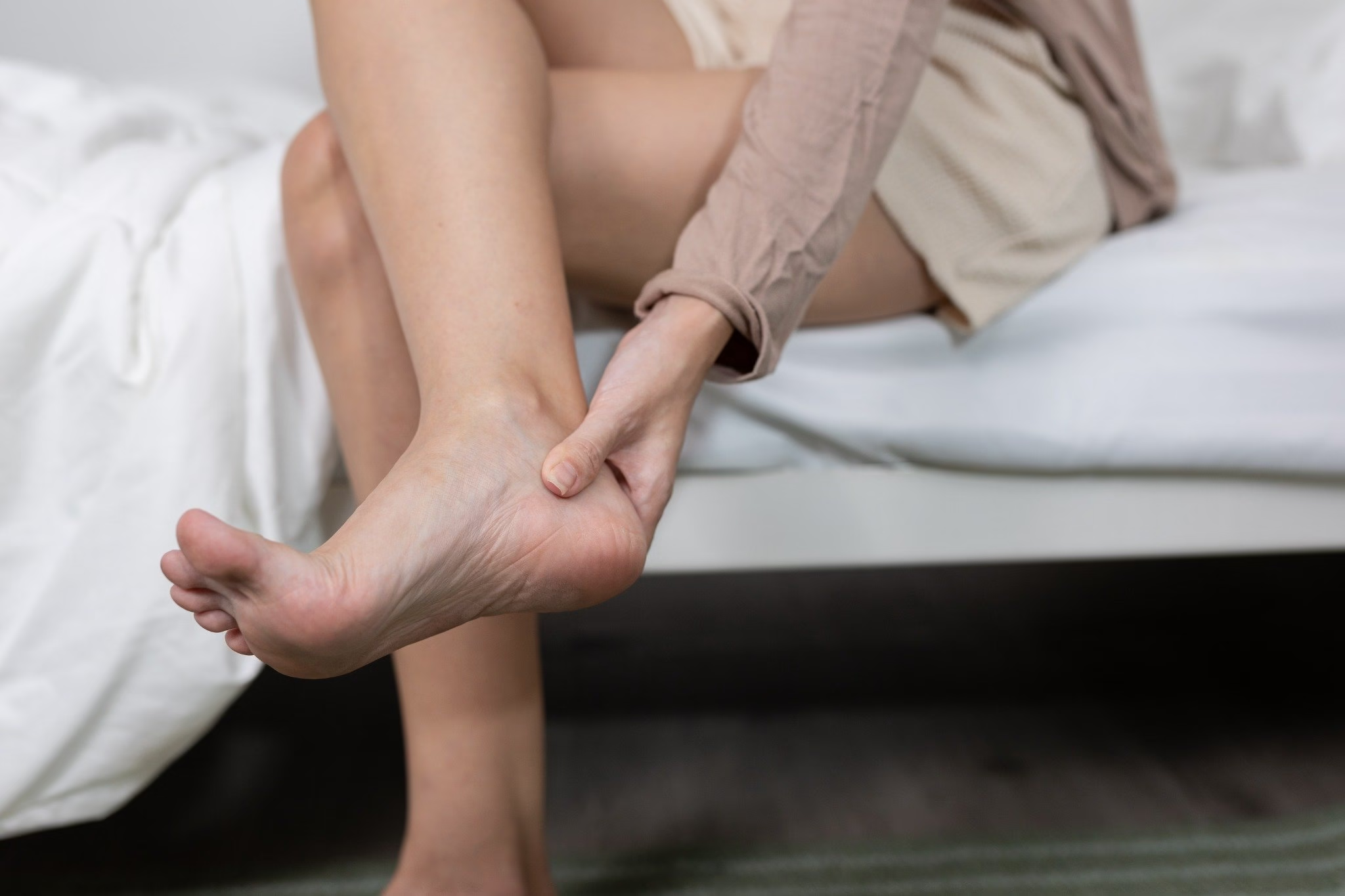
Pain at the back of the ankle may begin progressively and worsen with walking, sports, climbing stairs, or morning activity.
If left untreated, the condition can become chronic and significantly affect mobility and quality of life.
Common Symptoms
Patients with Achilles tendinitis often describe:
- Pain behind the ankle
- Morning stiffness
- Pain during sports or walking
- Tenderness along the tendon
- Swelling or thickening of the tendon
- Tight calf muscles
Ultrasound examination is often very helpful to evaluate tendon thickening, inflammation, microtears, or degenerative changes.
My Philosophy of Treatment
The Achilles tendon requires a precise and progressive treatment strategy.
My philosophy is based on avoiding unnecessary surgery whenever possible while treating both the tendon and the biomechanical factors contributing to overload.
Rehabilitation and Dry Needling
One of the key aspects of treatment is addressing calf muscle tightness and lower limb mechanics.
Dry needling may help reduce muscular tension in the calf muscles and improve flexibility and tendon loading patterns.
This is often combined with:
- Eccentric strengthening exercises
- Stretching protocols
- Activity modification
- Footwear optimization
- Progressive rehabilitation
Ultrasound-Guided Infiltration
In selected chronic cases, ultrasound-guided procedures may be considered.
Precision is extremely important around the Achilles tendon because certain injections directly inside the tendon may increase rupture risk. Ultrasound guidance improves safety and accuracy.
Depending on the condition, regenerative treatments such as PRP may also be discussed.
When Is Surgery Necessary?
Surgery is considered only for resistant chronic cases, tendon tears, or major degenerative changes that fail conservative management.
Surgical treatment may involve:
- Removal of degenerative tissue
- Tendon repair
- Tendon reinforcement procedures
However, many patients recover successfully through structured non-surgical treatment.
A Modern and Personalized Orthopedic Approach
Successful Achilles tendinitis treatment requires more than simply reducing pain.
My approach combines:
- Precise diagnosis
- Functional assessment
- Ultrasound evaluation
- Dry needling
- Rehabilitation
- Image-guided infiltrations
- Surgery only when truly necessary
The goal is to restore movement, function, and long-term tendon health while helping patients safely return to their daily and athletic activities.