

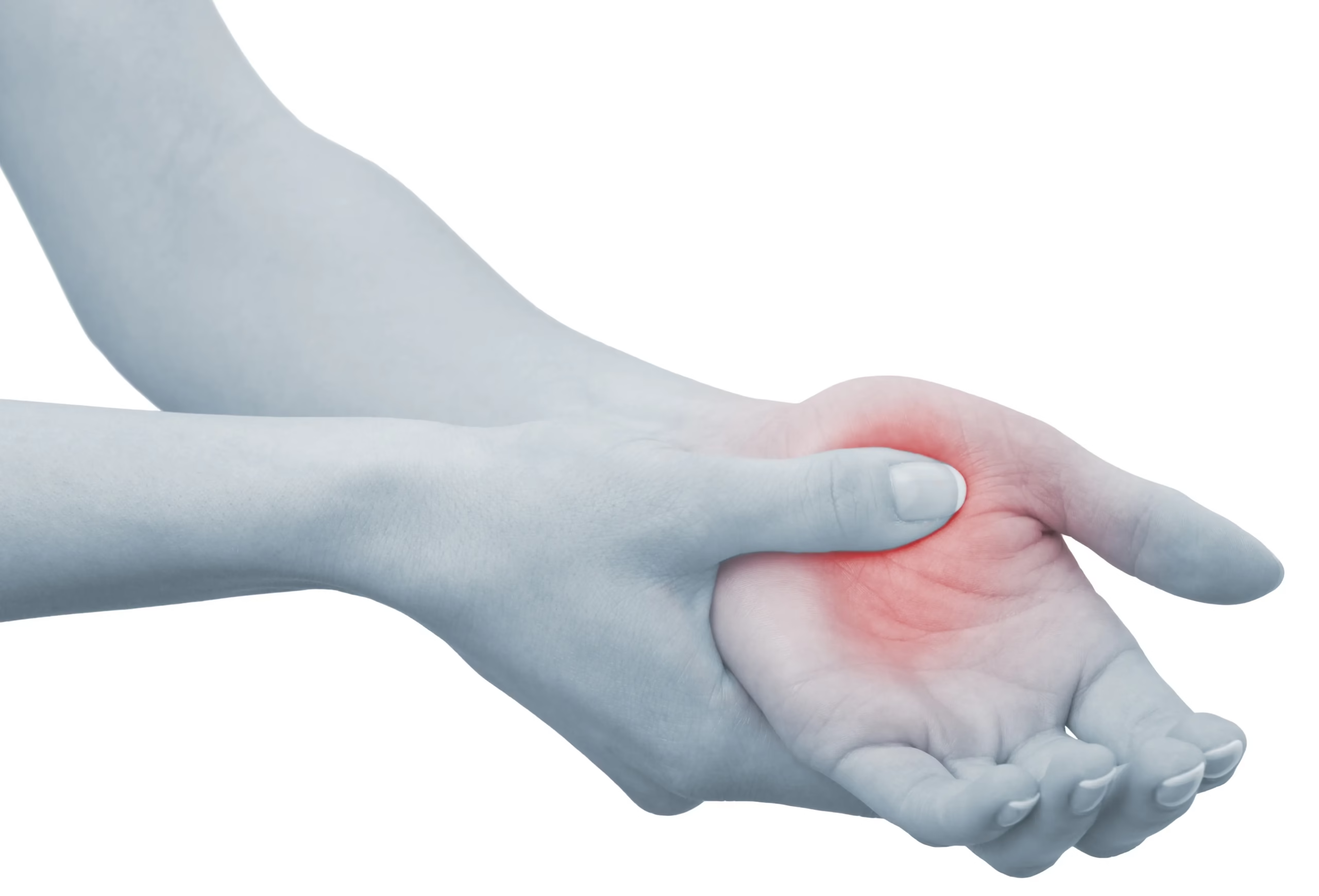
Understanding De Quervain’s Tenosynovitis
Pain at the base of the thumb can make simple daily activities surprisingly difficult. Opening a jar, lifting a child, typing on a phone, or even turning a key may become painful. One of the most common causes of this pain is De Quervain’s tenosynovitis.
This condition occurs when the tendons responsible for thumb movement become inflamed as they pass through a narrow tunnel on the wrist side of the thumb. Repetitive hand use, overuse, sports, lifting activities, and hormonal changes can all contribute to this painful condition.
Common Symptoms
Patients with De Quervain’s disease often experience:
- Pain on the thumb side of the wrist
- Pain when gripping or lifting objects
- Swelling near the thumb base
- Difficulty using the hand during daily activities
- Sharp pain when moving the thumb
- Weakness during pinching movements
The diagnosis is usually confirmed clinically during examination and may be supported with ultrasound imaging to evaluate tendon inflammation.
My Treatment Philosophy
At my practice, the goal is always to start with the least invasive and most effective solution possible.
Many patients improve significantly without surgery when the condition is treated early and precisely.
Conservative Treatment First
Initial treatment may include:
- Activity modification
- Wrist and thumb support
- Anti-inflammatory treatment
- Physical therapy
- Dry needling for associated muscular tension
Dry needling can help reduce muscular overload around the forearm and improve tendon mechanics by decreasing abnormal tension patterns contributing to inflammation.
Ultrasound-Guided Infiltration
When pain persists despite conservative care, an ultrasound-guided corticosteroid infiltration may provide excellent relief.
Using ultrasound guidance allows precise placement of the medication around the inflamed tendon sheath while minimizing risks to surrounding structures. Precision matters, especially in delicate areas such as the wrist where skin and tendons are superficial.
Many patients experience rapid pain relief and regain normal hand function after infiltration.
When Is Surgery Necessary?
Surgery is reserved for resistant cases that fail conservative management and infiltrations.
The procedure consists of releasing the tight tendon compartment to allow the tendons to glide normally again. It is generally a short and effective surgery with good outcomes when appropriately indicated.
However, surgery should not be the first step. Proper diagnosis, rehabilitation, and targeted treatment often avoid unnecessary procedures.
A Personalized Approach
Every patient is different. My philosophy is based on combining accurate diagnosis, modern minimally invasive techniques, rehabilitation, and surgery only when truly necessary.
The objective is not simply to reduce pain temporarily, but to restore long-term hand function and quality of life.