

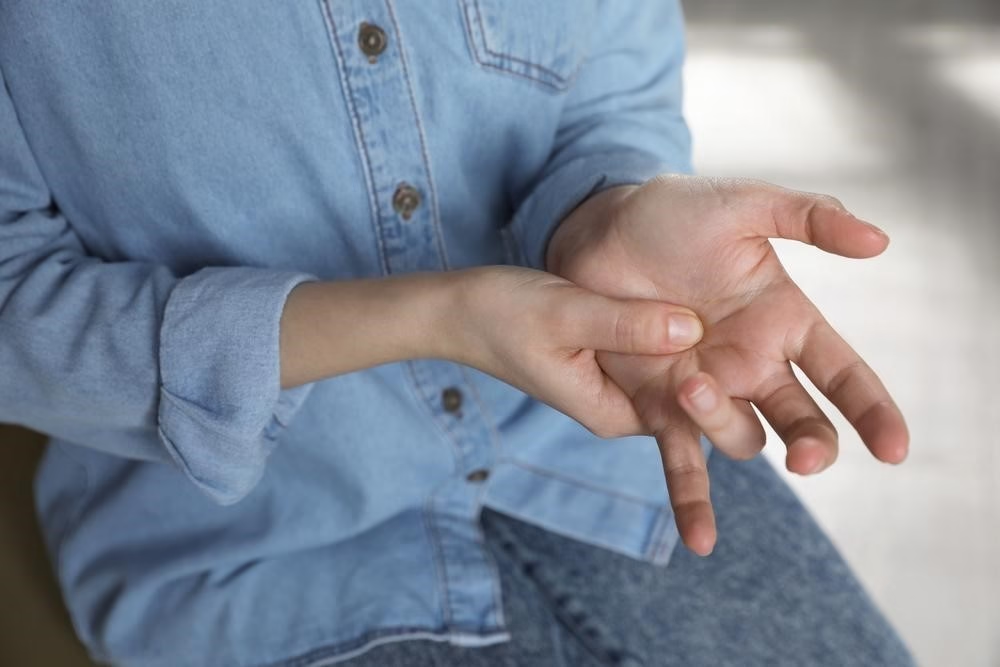
Have you ever noticed your finger catching or locking when you try to straighten it? Perhaps it clicks painfully before suddenly releasing, much like pulling a trigger. This common condition is known as trigger finger, or stenosing tenosynovitis.
Trigger finger can affect anyone, although it is more common in middle-aged adults and people who frequently perform repetitive gripping activities. While symptoms may begin as a minor annoyance, they can progress to painful locking that interferes with everyday tasks.
The good news is that trigger finger is highly treatable. Most patients improve with conservative treatment, and when surgery is necessary, it is typically a simple procedure with excellent outcomes.
What Is Trigger Finger?
The tendons that bend your fingers glide through small tunnels called tendon sheaths. These sheaths are lined with a smooth tissue that allows the tendons to move freely during gripping and finger motion.
At the base of each finger is a structure called the A1 pulley, which keeps the tendon close to the bone. In trigger finger, inflammation or thickening of the tendon or pulley narrows this space. As a result, the tendon no longer glides smoothly and begins to catch during movement.
Initially, this causes clicking. As the condition progresses, the finger may lock in a bent position and require assistance to straighten.
Who Is at Risk?
Trigger finger can develop in anyone but is more common in:
- Adults between 40 and 60 years of age
- Women
- Individuals with diabetes
- Patients with rheumatoid arthritis
- People who perform repetitive gripping or forceful hand activities
- Workers who regularly use vibrating tools
The thumb, ring finger, and middle finger are most commonly affected, although any finger can develop the condition.
Common Symptoms
Symptoms often begin gradually and may include:
- Pain or tenderness at the base of the finger
- A clicking or snapping sensation during movement
- Morning stiffness
- A feeling that the finger catches when bending
- A finger that locks in a bent position
- A small tender lump in the palm near the affected finger
Many patients notice that symptoms are worse in the morning and improve slightly as the hand warms up.
How Is Trigger Finger Diagnosed?
In most cases, trigger finger is diagnosed during a clinical examination.
Your orthopedic surgeon will:
- Discuss your symptoms
- Examine finger motion
- Feel for tenderness over the A1 pulley
- Assess whether the finger catches or locks
- Evaluate hand strength and function
Imaging studies such as X-rays are usually unnecessary unless another condition is suspected. Ultrasound may occasionally be used to evaluate the tendon and pulley.
Can Trigger Finger Go Away on Its Own?
In mild cases, symptoms may improve with activity modification and rest. However, untreated trigger finger can become progressively more painful and may eventually lock completely.
Seeking treatment early often leads to faster recovery and reduces the likelihood of surgery.
Conservative Treatment
Activity Modification
Reducing repetitive gripping or forceful hand activities can decrease irritation of the tendon and allow inflammation to settle.
Anti-inflammatory Medication
Short courses of anti-inflammatory medication may help relieve pain during the early stages, although they do not correct the mechanical narrowing responsible for the condition.
Splinting
A finger splint worn for several weeks can reduce tendon irritation by limiting excessive movement, particularly at night.
Hand Therapy
Gentle stretching and strengthening exercises guided by a hand therapist may improve flexibility and reduce stiffness, especially when combined with other treatments.
Corticosteroid Injection
A corticosteroid injection around the tendon sheath is one of the most effective non-surgical treatments for trigger finger.
The injection reduces inflammation around the tendon, allowing it to glide smoothly through the pulley.
Many patients experience significant improvement within a few days to a few weeks. In early cases, a single injection may completely resolve the symptoms.
Success rates are highest when treatment is provided before permanent locking develops.
When Is Surgery Recommended?
Surgery may be advised if:
- Symptoms persist despite conservative treatment
- Corticosteroid injections fail to provide lasting relief
- The finger remains locked
- Symptoms significantly interfere with work or daily activities
Trigger Finger Release Surgery
Trigger finger release is a short outpatient procedure performed under local anesthesia.
A small incision is made in the palm, and the surgeon carefully releases the A1 pulley. This immediately creates more space for the tendon to glide freely.
The procedure typically takes less than 20 minutes, and patients usually return home the same day.
Recovery After Surgery
Recovery is generally quick.
Most patients begin moving the finger immediately after surgery. Light activities are encouraged early, while heavy gripping should be avoided for several weeks.
Mild soreness around the incision is expected but usually improves quickly.
Most patients regain full function and experience complete resolution of the locking sensation.
Can Trigger Finger Return?
Recurrence after surgery is uncommon.
Some individuals, particularly those with diabetes or inflammatory arthritis, may later develop trigger finger in