

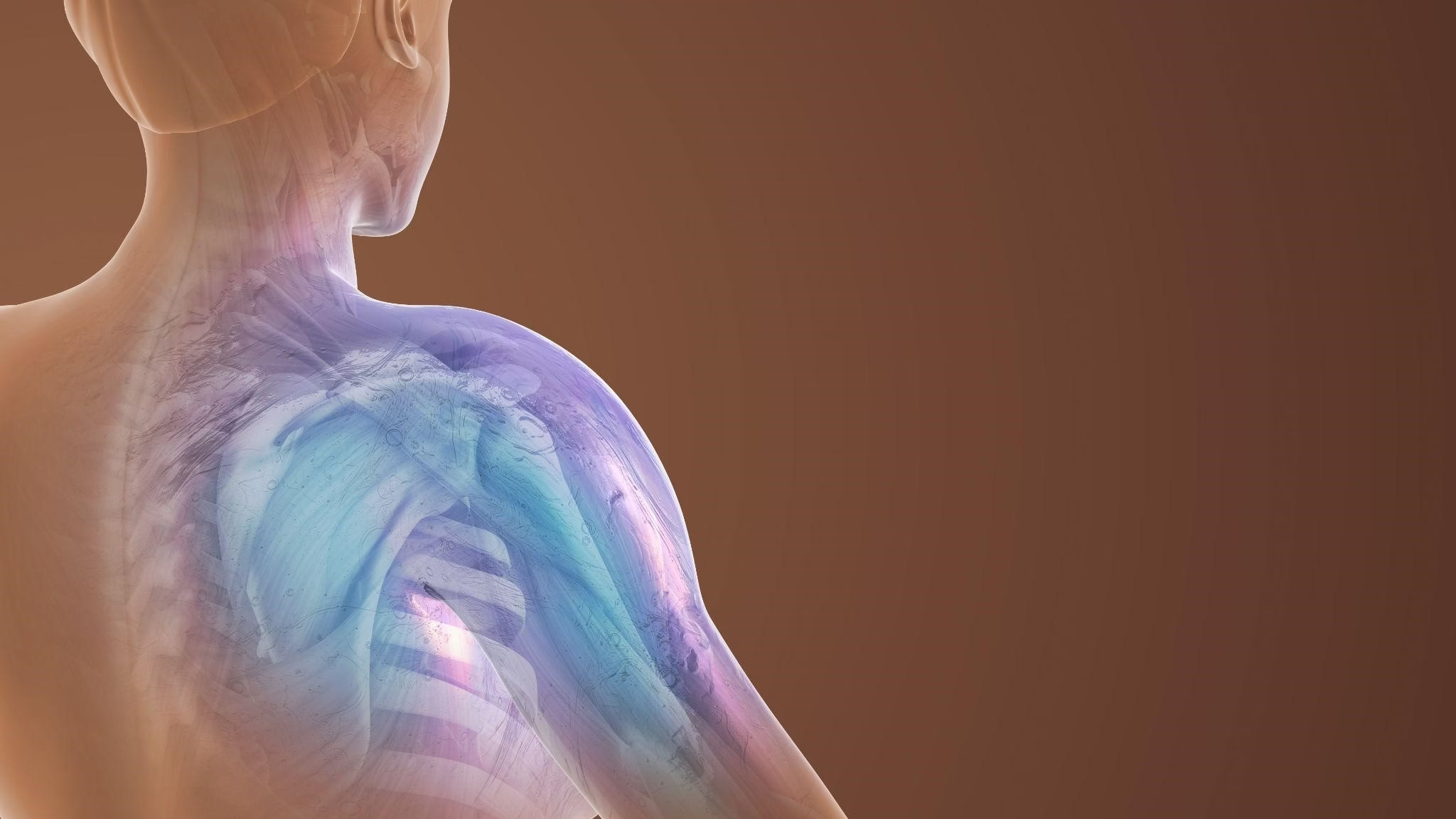
If you’ve noticed that your shoulder has gradually become painful and increasingly difficult to move, even during simple daily activities, you may be suffering from frozen shoulder, also known as adhesive capsulitis.
Unlike many shoulder injuries that occur after a fall or sports accident, frozen shoulder often develops slowly over weeks or months. Patients commonly report difficulty reaching overhead, fastening a bra, putting on a jacket, or sleeping comfortably on the affected side.
The good news is that frozen shoulder is a treatable condition. Early diagnosis and appropriate management can significantly reduce pain, restore movement, and improve quality of life.
What Is Frozen Shoulder?
The shoulder is a ball-and-socket joint surrounded by a flexible capsule that allows a wide range of motion.
In frozen shoulder, this capsule becomes inflamed, thickened, and tight. Scar tissue gradually forms inside the joint capsule, reducing its elasticity and restricting movement.
As the capsule tightens, every shoulder movement becomes increasingly painful and limited.
Who Is Most at Risk?
Frozen shoulder can affect anyone but is more common in:
- Adults between 40 and 65 years old
- Women
- People with diabetes
- Individuals with thyroid disorders
- Patients who have undergone shoulder surgery
- People who have kept the shoulder immobilized after a fracture or injury
- Patients recovering from prolonged illness
Sometimes, no obvious cause can be identified.
Common Symptoms
Symptoms usually appear gradually and worsen over time.
Patients often experience:
- Persistent shoulder pain
- Difficulty lifting the arm
- Pain during the night
- Loss of shoulder flexibility
- Difficulty reaching behind the back
- Pain while dressing or grooming
- Difficulty driving
- Stiffness that affects both active and passive movement
Unlike rotator cuff injuries, even when someone else tries to move your shoulder, the joint remains stiff.
The Three Stages of Frozen Shoulder
Stage 1 – Freezing Phase
This initial stage usually lasts several weeks to several months.
During this period:
- Pain gradually increases.
- Shoulder movement begins to decrease.
- Night pain becomes common.
- Daily activities become more difficult.
Stage 2 – Frozen Phase
Pain often becomes less intense, but stiffness is at its worst.
Patients may struggle with:
- Reaching overhead
- Washing their hair
- Fastening a seatbelt
- Reaching behind their back
- Putting on clothes
This stage can last several months.
Stage 3 – Thawing Phase
During the final stage, shoulder mobility slowly improves.
Pain continues to decrease, and normal function gradually returns.
Recovery can take several months, and patience is important.
How Is Frozen Shoulder Diagnosed?
Diagnosis begins with a detailed medical history and physical examination.
Your orthopedic surgeon evaluates:
- Active range of motion
- Passive range of motion
- Muscle strength
- Shoulder stability
- Areas of tenderness
A key finding is that both active and passive movements are restricted, helping distinguish frozen shoulder from other shoulder conditions.
Imaging
X-rays are often performed to rule out arthritis or fractures.
Ultrasound or MRI may be recommended to evaluate the rotator cuff and exclude other causes of shoulder pain.
Conditions That Can Mimic Frozen Shoulder
Several conditions may produce similar symptoms, including:
- Rotator cuff tears
- Shoulder impingement syndrome
- Calcific tendinitis
- Shoulder osteoarthritis
- Cervical spine disorders
- Shoulder instability
A careful examination helps establish the correct diagnosis.
Non-Surgical Treatment
Most patients improve without surgery.
Activity Modification
Avoid painful overhead activities while maintaining gentle daily movement to prevent further stiffness.
Medication
Anti-inflammatory medications may help reduce pain during the early stages, allowing more comfortable participation in rehabilitation.
Physical Therapy
Physical therapy is one of the most important treatments.
A structured rehabilitation program focuses on:
- Gentle stretching
- Restoring shoulder mobility
- Improving flexibility
- Strengthening surrounding muscles
- Gradually returning to normal function
Exercises should be progressive and performed without forcing excessive pain.
Corticosteroid Injections
Ultrasound-guided corticosteroid injections can significantly reduce inflammation and pain, particularly during the early “freezing” stage.
Pain relief often allows patients to participate more effectively in physical therapy.
Hydrodilatation
Hydrodilatation involves injecting sterile fluid into the shoulder joint under imaging guidance.
The goal is to gently stretch the tight joint capsule, reduce stiffness, and improve movement.
For selected patients, this can provide excellent results when combined with rehabilitation.
When Is Surgery Needed?
Surgery is considered only when symptoms persist despite several months of appropriate conservative treatment.
Patients may be candidates if they continue to experience:
- Severe stiffness
- Persistent pain
- Significant functional limitation
- Failure to improve with physical therapy and injections
Arthroscopic Capsular Release
Arthroscopic capsular release is a minimally invasive procedure performed through small incisions.
Using a tiny camera and specialized instruments, the surgeon carefully releases the contracted capsule, allowing the shoulder to regain its normal range of motion.
The procedure typically results in:
- Reduced pain
- Improved mobility
- Faster rehabilitation
- Small scars
- Earlier return to daily activities
Physical therapy begins soon after surgery to maintain the restored movement.
Recovery
Recovery varies from patient to patient.
Many individuals improve significantly with conservative treatment, while surgical patients often notice progressive improvement over the following weeks and months.
Following your rehabilitation program consistently is essential for achieving the best outcome.
Can Frozen Shoulder Be Prevented?
Although not all cases can be prevented, the risk may be reduced by:
- Beginning shoulder motion early after injury when medically appropriate
- Following rehabilitation programs after surgery
- Managing diabetes effectively
- Avoiding prolonged shoulder immobilization
- Seeking early medical evaluation when pain and stiffness develop
Frequently Asked Questions
Can frozen shoulder heal on its own?
Many patients eventually improve, but recovery may take one to three years. Early treatment often shortens recovery and improves function.
Is frozen shoulder the same as a rotator cuff tear?
No. A rotator cuff tear primarily affects muscle and tendon function, whereas frozen shoulder is caused by tightening and inflammation of the joint capsule.
Is surgery always necessary?
No. The majority of patients improve with conservative treatment, including physical therapy, medications, and injections.
Can frozen shoulder come back?
Recurrence in the same shoulder is uncommon, but some people may later develop frozen shoulder in the opposite shoulder.
When should I see an orthopedic surgeon?
If shoulder pain and stiffness continue to worsen, interfere with sleep, or limit everyday activities, an orthopedic evaluation is recommended. Early diagnosis allows treatment to begin before stiffness becomes severe.
Conclusion
Frozen shoulder can be frustrating, but it is a highly manageable condition. With an accurate diagnosis, appropriate rehabilitation, and timely treatment, most patients regain excellent shoulder function and return to their normal activities.
Whether treatment involves physical therapy, image-guided injections, or minimally invasive arthroscopic surgery, the goal is always the same: relieve pain, restore movement, and help you get back to living comfortably.
Schedule a Consultation
If you are experiencing persistent shoulder pain, stiffness, or difficulty moving your arm, early evaluation can make a significant difference.
Dr. Jean-Jacques Yaacoub specializes in the diagnosis and treatment of shoulder conditions, offering individualized care ranging from conservative management to advanced arthroscopic surgery when indicated.
Book your consultation today to begin your journey toward a pain-free and more mobile shoulder.